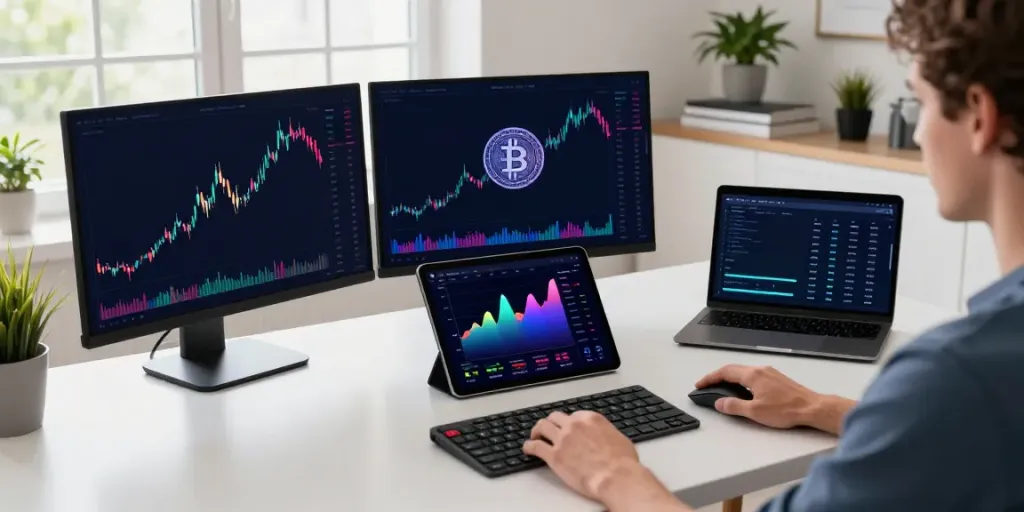
Understanding the Crypto Market Data API
The rapid evolution of blockchain technology has enabled a myriad of applications, including trading platforms that leverage real-time financial data to make informed decisions. A crypto market data API serves as a bridge between the vast cryptocurrency exchanges and developers or institutions looking to build applications or analysis frameworks. By utilizing such an API, users can access critical data such as real-time price quotes, order book statuses, and historical trading metrics efficiently.
What is a Crypto Market Data API?
A Crypto Market Data API is an application programming interface that allows developers to interact programmatically with cryptocurrency exchanges and obtain essential financial data. This data typically includes price tickers, trading volume, order book information, and various analytics on assets like Bitcoin (BTC) and Ethereum (ETH). Market data APIs provide a centralized interface for disparate data points, allowing users to aggregate and display cryptocurrency information seamlessly.
Key Features of Market Data APIs
- Real-Time Data Streaming: Access to live price feeds and market metrics for timely decision-making.
- Historical Data: Longitudinal market data enables trend analysis and backtesting strategies.
- Order Book Management: Real-time updates on buy and sell orders help users gauge market liquidity.
- Cross-Exchange Aggregation: APIs can compile information from multiple exchanges, offering a broader market view.
- On-Chain Metrics: Insights into blockchain transaction statistics for comprehensive analysis.
Use Cases for Developers and Traders
Developers and traders alike utilize crypto market data APIs in various innovative ways, whether it's building trading bots, analysis tools, or applications that incorporate live market trends. For traders, the availability of real-time data facilitates algorithmic trading processes, while developers can integrate these APIs into decentralized applications (dApps) or financial services to offer enhanced features.
How to Optimize Trading with Real-Time Data
Benefits of Low-Latency API Access
Low-latency access to market data is crucial for traders relying on algorithmic strategies. Even a delay of milliseconds can significantly impact trading outcomes, especially in the volatile realm of cryptocurrency. Integrating a low-latency crypto market data API allows traders to execute orders promptly and seize fleeting market opportunities that can be lost in slower data environments.
Analyzing Market Trends Using API Data
With access to real-time data through an API, traders can employ advanced analytics and machine learning techniques to identify market trends. This includes the creation of algorithmic trading systems that observe price patterns, volume spikes, and other indicators to forecast price movements. By collecting historical data through APIs, traders can backtest their strategies for effectiveness before deploying them in live markets.
Integrating APIs into Trading Platforms
For developers building trading applications, integration of a market data API can enhance user experience by providing real-time data visualization through charts and dashboards. Users can also create customized alerts and notifications based on specific market conditions, transforming a trading platform into a proactive trading assistant capable of adapting to user preferences.
DeFi and the Role of Market Data APIs
Understanding DeFi Protocols and APIs
Decentralized Finance (DeFi) has revolutionized the financial landscape by removing intermediaries and creating open financial systems. Market data APIs play an essential role in this ecosystem, providing developers and users with the necessary data to leverage various DeFi protocols. By securing access to real-time market data, users can confidently engage in yield farming, lending, and borrowing activities that define the DeFi space.
Yield Farming Strategies with Real-Time Data
Yield farming, or liquidity mining, involves users lending their cryptocurrencies through smart contracts to earn returns. By using a market data API, farmers can assess liquidity pool performance, compare returns across different platforms, and adjust strategies dynamically based on yield fluctuations. Real-time access to this data can maximize potential earnings by allowing users to move assets quickly between pools as conditions change.
Adopting Best Practices for DeFi Investments
Investing in DeFi requires vigilance and strategic planning. Utilizing market data APIs can help track projects and protocols robustly. Best practices include diversifying investments across multiple protocols, monitoring gas fees, and assessing project legitimacy through comprehensive data analysis to avoid high-risk scenarios such as “rug pulls” or exit scams.
Security Considerations for Using APIs
Protecting Your Data and API Keys
Securing API keys is vital when integrating with market data APIs. Developers should implement best practices such as not hardcoding keys within applications, using environment variables, and leveraging API gateways that enhance security by masking and managing requests. Using a hardware security module (HSM) for key management can add an additional layer of protection.
Common Vulnerabilities and How to Mitigate Them
Common vulnerabilities of APIs include man-in-the-middle (MitM) attacks, SQL injection, and denial-of-service (DoS) attacks. To mitigate these risks, developers should conduct regular security audits, use HTTPS for all data transmissions, and implement rate limiting on requests to prevent abuse. Additionally, the adoption of multi-factor authentication for access management can enhance security.
Implementing Security Protocols for API Access
To secure API access, it's crucial to establish strict access control mechanisms. Employing OAuth tokens for authorization and logging API usage can help detect anomalies that may indicate security threats. Furthermore, developers should routinely update and patch their systems to eliminate vulnerabilities in the software being used to interact with APIs.
Future Trends in Crypto Market Data APIs
Emerging Technologies Changing the API Landscape
The future landscape of crypto market data APIs will continue to evolve as technological advancements such as AI, machine learning, and blockchain interoperability gain traction. Future APIs may leverage these technologies to create predictive models that assist traders with more nuanced market forecasting beyond traditional metrics.
Comparing Layer-1 and Layer-2 Solutions
As blockchain networks continue to scale, the use of Layer-1 (L1) versus Layer-2 (L2) solutions will impact how market data is accessed. L1 solutions, such as Ethereum, offer security through decentralization, while L2 solutions like Optimism or Polygon enhance speed and reduce costs. Understanding the differences in accessing APIs on these layers is critical for developers as they build applications tailored to user needs.
Impact of Regulatory Changes on API Usage
As regulatory frameworks surrounding cryptocurrency evolve, the implications for API usage will be profound. Regulations such as the EU's Markets in Crypto-Assets (MiCA) will influence how data is aggregated and provided. Complying with local laws will necessitate adjustments in API functionalities, requiring developers to be adaptive and informed about compliance-related changes.
What are the best APIs for real-time crypto data?
When exploring options, several market-leading APIs provide comprehensive insights, including CoinGecko, CoinMarketCap, and iTick. Choosing the best depends on specific use cases such as the range of data, latency, or user requirements.
How can I integrate a crypto market data API into my application?
To integrate a crypto market data API, developers should first review the API’s documentation to understand its endpoints and authentication processes. From there, they can use programming languages such as Python or JavaScript to implement API calls, retrieving market data and displaying it in their applications. Utilizing tools like Postman for testing API endpoints can ease the integration process.
What security measures should I take when using crypto APIs?
Security measures when using crypto APIs include employing secure coding practices, protecting sensitive API keys, using encryption for data transmissions, and performing regular security audits. Ensuring that APIs comply with the latest security standards and vulnerability testing methodologies is also imperative.
How does a crypto market data API affect trading strategies?
Access to a real-time market data API can significantly influence trading strategies by providing traders with immediate market information necessary for executing trades effectively. This access allows traders to implement more dynamic strategies that can quickly adapt to changing market conditions.
Are there any free options for accessing crypto market data APIs?
Yes, several APIs offer free tiers, such as CoinGecko and iTick, that allow developers to access limited market data functionalities. However, enhanced features or higher usage limits typically require a paid subscription, emphasizing the need for developers to evaluate their requirements before selecting an API service.
This is not financial advice - DYOR (Do Your Own Research). Cryptocurrency investments carry high risk and volatility, and past performance does not guarantee future results. Only invest what you can afford to lose, and consult with a qualified financial advisor before investing.